
Table of Contents
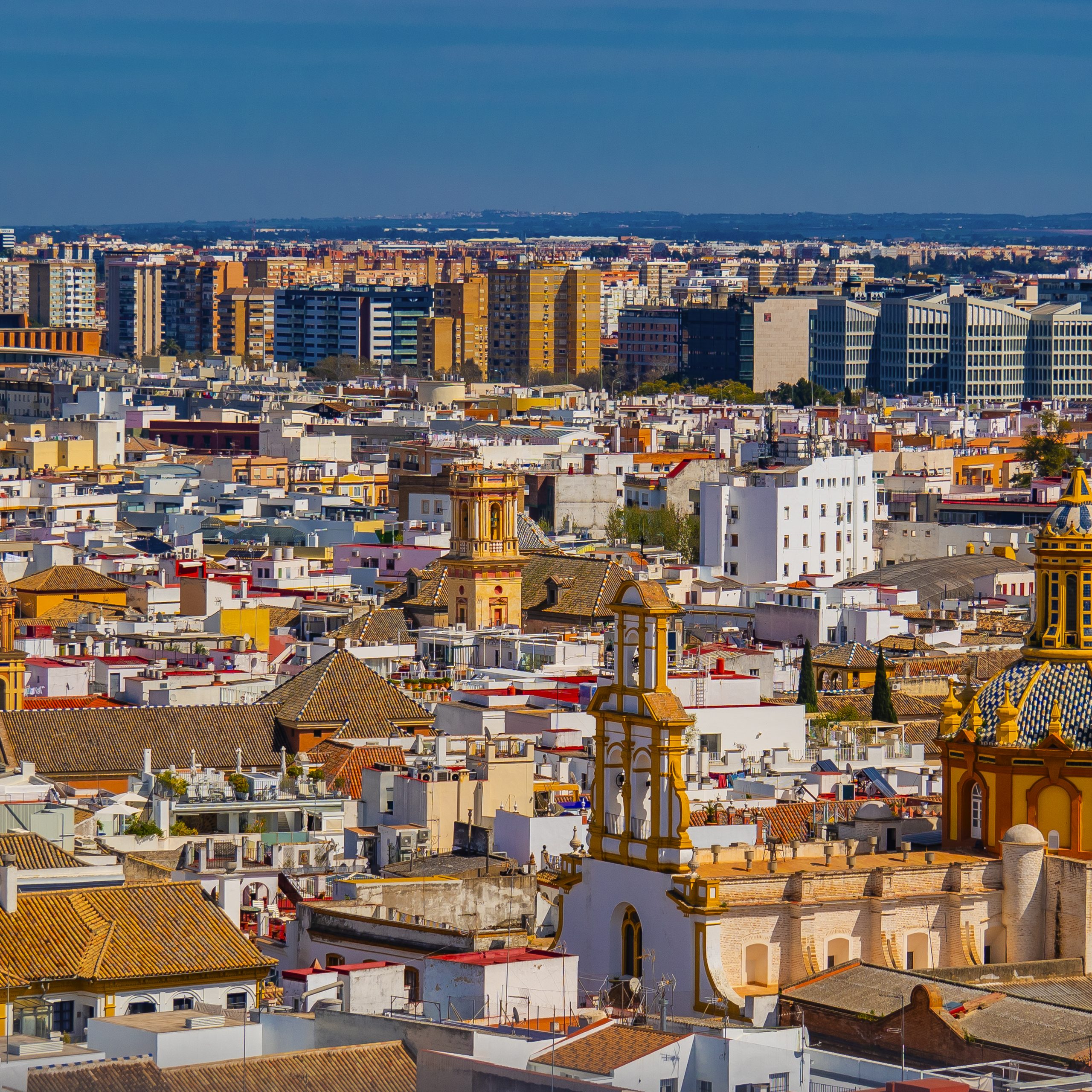
In the heart of Andalusia lies Seville, a city of sunlight, orange trees, graceful plazas, historic streets, and deep cultural character. Known in Spanish as Sevilla, it is a place where centuries of history remain visible in the architecture, the neighbourhoods, the music, the food, and the daily rhythm of life.
Seville is elegant without feeling distant, historic without feeling frozen in time, and lively without losing its sense of calm. Its streets invite visitors to wander slowly, discover hidden courtyards, and experience a city shaped by Roman, Islamic, Jewish, Christian, and modern Spanish influences.

🏛️ A City Built from Many Civilizations
Seville’s history reaches back more than two thousand years. The city was originally associated with the ancient settlement of Hispalis and later became an important Roman centre.
During the Islamic period, Seville grew into a major city of commerce, scholarship, architecture, and culture. The influence of that era remains visible in the city’s courtyards, tilework, arches, gardens, water features, and architectural details.

After the Christian conquest in the thirteenth century, many existing buildings and urban spaces were transformed, creating the layered character that defines Seville today. Rather than belonging to only one historical period, the city is a living record of many cultures meeting and reshaping one another.
 _
_
⛪ The Cathedral and the Giralda
The Cathedral of Seville is one of the city’s most impressive landmarks. Its immense scale, Gothic design, chapels, artwork, and historical importance make it one of the defining monuments of Andalusia.
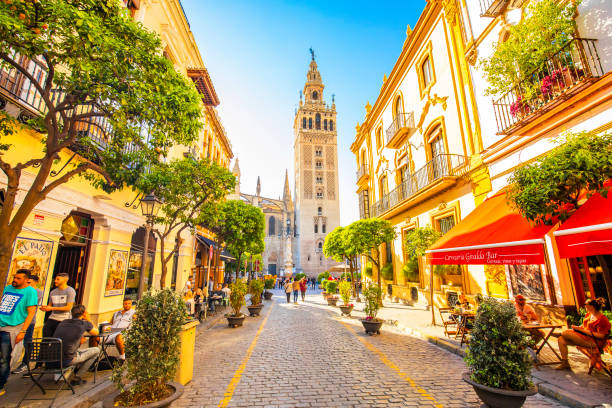
Beside the cathedral stands the Giralda, a former minaret that was later adapted as a bell tower. Its elegant proportions and distinctive silhouette have become one of the most recognizable symbols of Seville.
From many parts of the city, the Giralda appears above rooftops and streets, helping visitors orient themselves as they explore the historic centre.Seville Cathedral
🕌 The Real Alcázar: Gardens of History
The Real Alcázar of Seville is a remarkable royal palace complex whose architecture reflects centuries of change. Its courtyards, intricate tilework, carved details, gardens, fountains, and shaded walkways create an atmosphere that is both regal and peaceful.
The palace is especially beautiful because it combines formal design with natural elements. Water moves through long pools, orange trees provide shade, and decorated walls reveal the craftsmanship of earlier generations.
The Alcázar is not simply a monument to admire from the outside. It is a place to explore slowly, with every courtyard and garden offering a different perspective on Seville’s past.
🌸 The Streets of Santa Cruz
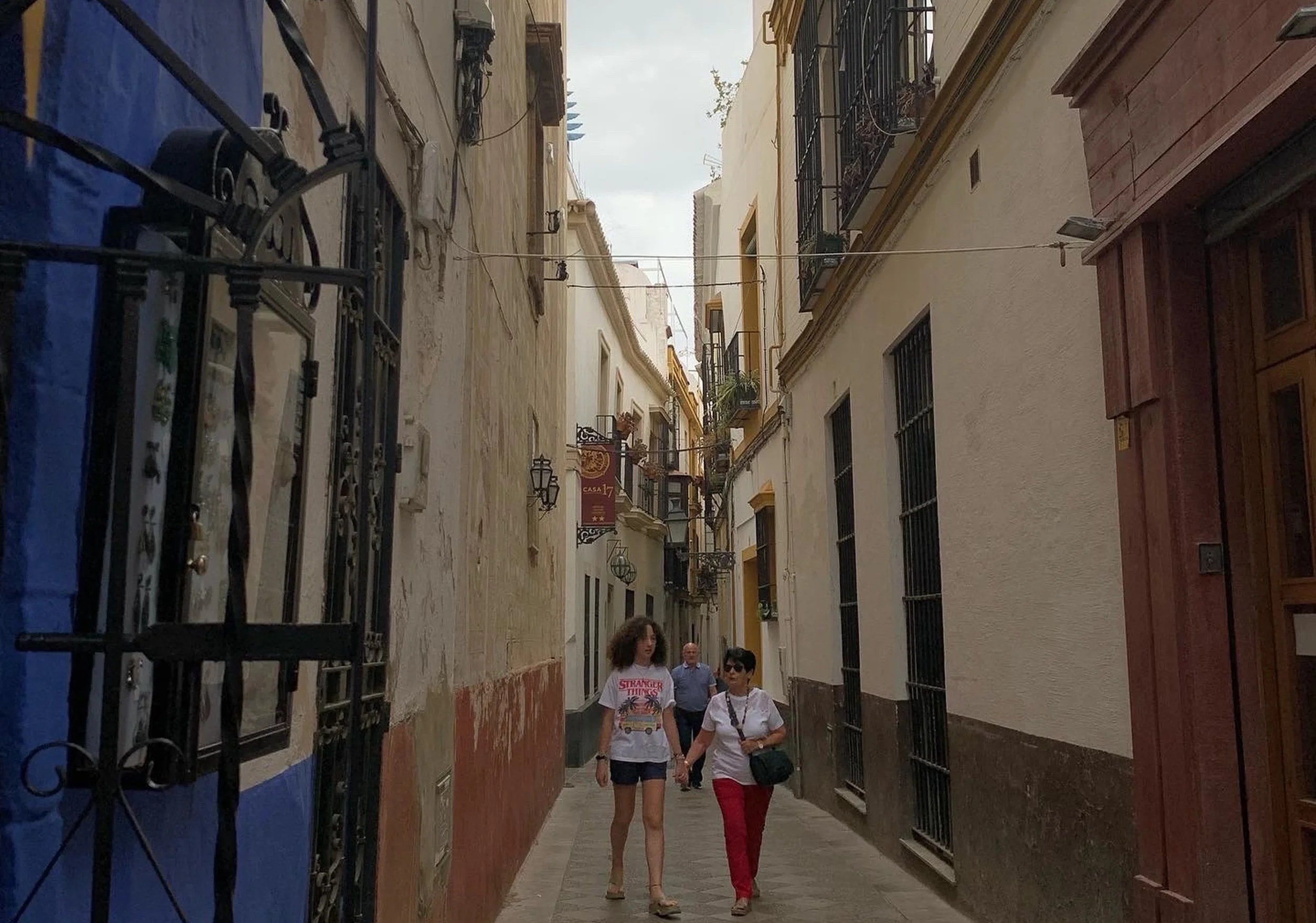
The historic neighbourhood of Santa Cruz is known for its narrow streets, whitewashed buildings, flower-filled balconies, small plazas, and hidden courtyards.
The streets are often too narrow for heavy traffic, which makes them ideal for walking. A simple turn can reveal a quiet square shaded by trees, a colourful ceramic sign, an old doorway, or a small café filled with local life.
Santa Cruz is beautiful in every season, but it is particularly enchanting in the early morning and late afternoon, when the sunlight turns the buildings warm gold.

🧱 The Character of Seville’s Streets
Seville’s streets are among its greatest attractions. Some are grand and ceremonial, while others are intimate and almost hidden.
Historic lanes wind through neighbourhoods filled with tile-covered façades, balconies, wooden doors, old churches, small shops, and local restaurants. Many buildings are designed around interior courtyards, allowing residents to enjoy shade and air during the hot summer months.
The city’s ceramic traditions are visible everywhere. Decorative tiles appear on walls, fountains, street signs, benches, and building entrances. Their blue, green, yellow, and white patterns add colour to the urban landscape.
🏺 Plaza de España
One of Seville’s most spectacular public spaces is Plaza de España, a sweeping semi-circular complex built for the Ibero-American Exposition of 1929.
The plaza features bridges, canals, towers, grand stairways, arches, and richly decorated ceramic alcoves representing Spain’s provinces. Its design combines Renaissance, Baroque, and regional architectural influences, creating a setting that feels both monumental and welcoming.
Visitors often walk along the water, admire the tilework, take photographs, or sit beneath the covered galleries. The plaza is one of Seville’s most recognizable landmarks and one of the finest examples of early twentieth-century Spanish architecture.
_
🌿 María Luisa Park
Next to Plaza de España is María Luisa Park, a peaceful green space filled with palms, fountains, tiled benches, ponds, gardens, and shaded paths.
The park offers a quiet contrast to the lively streets of the city centre. Residents walk, cycle, read, meet friends, and enjoy the shade beneath the trees. Visitors can spend hours exploring its pathways and discovering small architectural features tucked among the gardens.
The park reflects one of Seville’s most appealing qualities: the ability to move from a busy urban street into a calm and beautiful natural setting within minutes.
🌉 The Guadalquivir River
The Guadalquivir River has played a major role in Seville’s development. It helped connect the city to wider networks of trade, travel, and exploration, and it remains central to the city’s atmosphere.
Along the riverbanks, visitors can enjoy walking paths, bridges, gardens, cafés, and views of historic buildings. The water becomes especially beautiful near sunset, when the sky and architecture are reflected on the surface.
The river also reveals another side of Seville—open, spacious, and relaxed.

💃 Music, Dance, and Cultural Life
Seville is strongly associated with flamenco, a powerful art form combining music, singing, rhythm, and dance. Although flamenco has roots throughout Andalusia, Seville has long been one of its most important cultural centres.
The city’s cultural life extends beyond performance venues. Music can be heard in neighbourhoods, restaurants, festivals, and traditional gatherings. Seville’s annual celebrations bring together residents and visitors through processions, performances, food, decorated streets, and deeply rooted traditions.
Flamenco is not simply entertainment in Seville. It is an expression of emotion, identity, history, and community.
👥 The People of Seville
The people of Seville contribute greatly to the city’s warmth and character. Daily life often unfolds outdoors, in plazas, cafés, markets, courtyards, and shaded streets.
Families gather for meals, friends meet for conversation, and neighbourhoods maintain strong local identities. Hospitality is expressed through food, humour, long conversations, and a willingness to share the city’s traditions with visitors.
Seville’s people also understand the importance of rhythm. Life is not always rushed. Meals may last longer, evenings may begin later, and social life often extends into the streets after sunset.
🍊 Orange Trees and the Scent of the City
Seville is famous for its orange trees, which line many streets and plazas. Their green leaves provide shade, while their blossoms fill the air with a delicate fragrance in spring.
The trees are more than decoration. They contribute to the city’s unique sensory identity. Walking through Seville often means experiencing architecture, sunlight, music, warm stone, and the scent of orange blossoms at the same time.
In winter, the bright fruit adds another layer of colour to the streets, contrasting beautifully with white façades, blue tiles, and golden light.
🍽️ Food and the Art of Gathering
Food is one of the most important ways to experience Seville. The city is known for tapas, small plates designed to be shared while people move from one restaurant or bar to another.
Traditional dishes often include regional ingredients such as olive oil, vegetables, cured meats, seafood, cheese, and local spices. Meals are usually social experiences rather than hurried necessities.
A visitor may begin with a simple plate in a historic neighbourhood and continue through the evening, discovering different flavours while observing the rhythm of the city around them.
🌅 Seville at Sunset
As evening approaches, Seville changes character. The heat softens, shadows grow longer, and the façades of historic buildings begin to glow.
Plazas fill with conversation. The streets become more active. Cafés and restaurants welcome guests, while the sound of music drifts through open doors and courtyards.
The Giralda becomes a dark silhouette against the sky, and the Guadalquivir reflects the last colours of the day. This is when Seville often feels most alive—not loud or hurried, but deeply social and full of atmosphere.

🌤️ A City for Every Season
Seville offers something different throughout the year.
🌱 Spring
Spring is one of the city’s most beautiful seasons. Orange blossoms fill the air, gardens bloom, and historic streets are especially vibrant.
☀️ Summer
Summer brings intense sunlight and warm evenings. Visitors often plan outdoor activities for the morning or later afternoon, when the city becomes more comfortable for walking.
🍂 Autumn
Autumn offers softer light and a calmer atmosphere. It is an excellent season for exploring neighbourhoods, gardens, museums, and riverside paths.
❄️ Winter
Winter is generally mild compared with many parts of Europe. The streets remain lively, and the lower temperatures make it comfortable to explore the city on foot.
❤️ The Lasting Charm of Seville
Seville is a city that reveals itself gradually. Its most memorable moments may not always happen at the most famous landmarks. They may occur on a quiet street, inside a shaded courtyard, beside a small fountain, or at a café where local residents gather in the evening.
The city’s beauty comes from the way its elements work together: history and modern life, architecture and nature, tradition and creativity, grand monuments and intimate streets.
Seville is not simply a place to visit. It is a city to experience—through its sunlight, its music, its people, its streets, its food, and its enduring connection to Andalusian history.