
Table of Contents
There is a special kind of beauty in Prince Edward Island—one that feels gentle, welcoming, and deeply connected to the land. Known affectionately as P.E.I., Canada’s smallest province is a place of red cliffs, peaceful beaches, rolling farmland, historic towns, fishing villages, and winding coastal roads.
Here, the landscape changes with the seasons, but its character remains remarkably consistent. Fields stretch toward the ocean, lighthouses stand watch over the shoreline, and small communities continue to preserve traditions shaped by generations of island life.

🏝️ A Small Island with a Remarkable Story
Prince Edward Island is located in the Gulf of St. Lawrence and is the smallest province in Canada. Its capital and largest city, Charlottetown, is known as the “Birthplace of Confederation” because the Charlottetown Conference of 1864 helped begin the discussions that eventually led to the creation of Canada.
Long before European settlement, the island was home to the Mi’kmaq people, who know the island as Epekwitk. Their history, culture, knowledge of the land, and relationship with the waters remain an important part of the island’s identity.

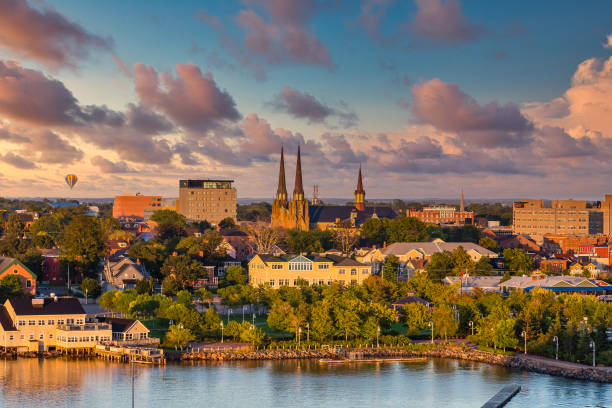
The island later became shaped by French and British settlement, agriculture, fishing, shipbuilding, and trade. In 1873, Prince Edward Island joined Confederation, becoming one of Canada’s provinces. [1]Historic view of Charlottetown
🏛️ Charlottetown: The Heart of the Island
Charlottetown has the atmosphere of a city that values its past while continuing to evolve. Its historic downtown is filled with elegant heritage buildings, painted wooden homes, churches, cafés, galleries, boutique shops, and tree-lined streets.
Walking through Charlottetown can feel like stepping into a beautifully preserved chapter of Canadian history. The city’s streets invite visitors to slow down, admire the architecture, and notice the details: decorative doorways, colourful façades, old brick sidewalks, iron railings, and gardens bright with flowers.
The waterfront adds another dimension to the city. Boats move through the harbour, the breeze carries the scent of salt water, and the shoreline provides beautiful views at sunrise and sunset.

🚶♀️ The Beauty of Island Streets
One of the great pleasures of Prince Edward Island is simply driving or walking through its streets. Roads curve through farmland, forests, villages, and coastal communities. There is rarely a need to rush.
In Charlottetown, streets such as Great George Street and Victoria Row offer a charming blend of history and modern life. Historic buildings stand beside restaurants, cafés, theatres, and local businesses. In the smaller communities, roads become quieter and more scenic, passing barns, potato fields, fishing wharves, churches, and homes surrounded by gardens.
The island’s streets reflect its personality: modest, peaceful, colourful, and closely connected to the landscape.
🌾 The Red Soil of Prince Edward Island
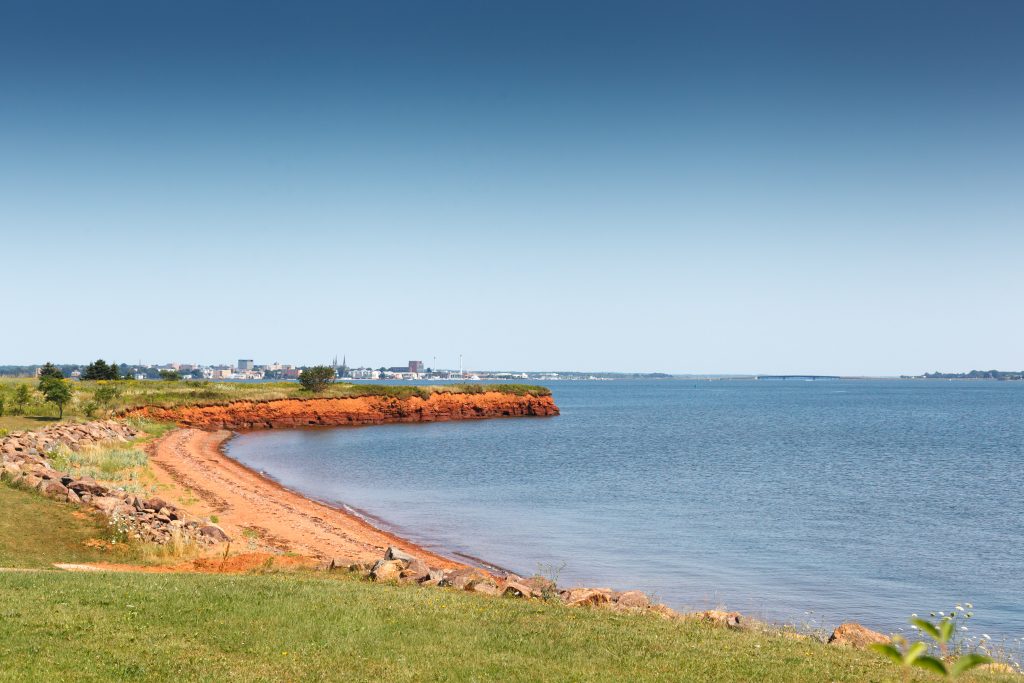
One of the island’s most recognizable features is its vivid red soil. Rich in iron, the soil takes on a deep reddish colour that becomes especially striking after rain or when contrasted with green fields and blue ocean water.
Agriculture has long been central to island life. Prince Edward Island is particularly known for its potatoes, but farming traditions extend across the province. Fields, barns, farmhouses, and country roads create a landscape that is both productive and beautiful.
The red earth is more than a scenic detail. It is part of the island’s agricultural heritage and a reminder of the generations who have worked the land.
Prince Edward Island countryside_
🌊 Beaches, Cliffs, and Coastal Landscapes
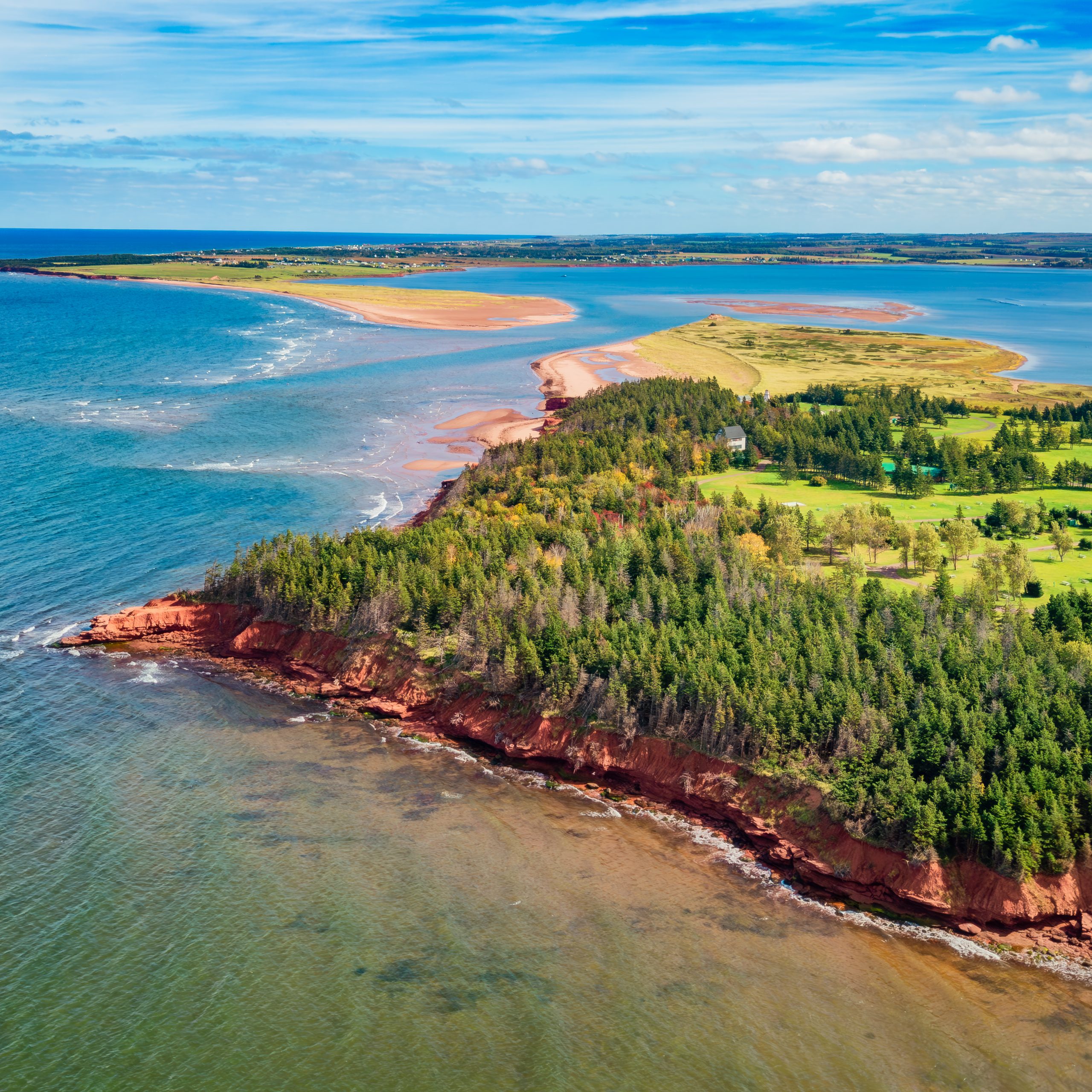
Prince Edward Island’s coastline is among its greatest treasures. The island offers long sandy beaches, quiet coves, dramatic sandstone cliffs, dunes, salt marshes, and peaceful ocean views.
The colours of the coast change throughout the day. Morning light may make the water appear silver and pale blue. In the afternoon, the cliffs glow orange and gold. At sunset, the shoreline becomes a panorama of deep red, pink, purple, and amber.
Many visitors come to the island for its beaches, but the coastal experience is about more than swimming. It is about walking beside the water, listening to the waves, collecting memories, and watching seabirds move across the sky.

🏖️ Cavendish and the Island’s Literary Heritage
Cavendish is one of the island’s most famous destinations, particularly because of its association with Lucy Maud Montgomery, the author of Anne of Green Gables.
Montgomery’s stories introduced readers around the world to the landscapes, villages, fields, woods, and coastal scenery of Prince Edward Island. Although the novels are works of fiction, their sense of place is deeply rooted in the island’s natural beauty and rural way of life.
For many visitors, travelling through Cavendish and the surrounding countryside feels like entering a familiar literary landscape—one filled with red roads, bright gardens, peaceful fields, and dramatic shorelines.
🏠 The People of Prince Edward Island
The character of Prince Edward Island is inseparable from its people. Islanders are often recognized for their warmth, hospitality, humour, and strong connection to community.
Life on the island has traditionally been shaped by the sea and the land. Fishing families, farmers, craftspeople, artists, business owners, cooks, guides, and musicians all contribute to the province’s distinctive identity.
Community remains important. Local festivals, farmers’ markets, ceilidhs, agricultural fairs, seafood suppers, and cultural events bring people together throughout the year. These traditions create a sense of belonging that visitors can feel almost immediately.
The island’s hospitality is not loud or showy. It is often expressed through a friendly conversation, a recommendation from a local resident, a welcoming restaurant, or a story shared over a cup of coffee.
🦞 A Culinary Tradition Shaped by the Ocean
The island’s food culture is closely connected to its geography. Fresh seafood is central to many local meals, including lobster, mussels, oysters, clams, scallops, and fish.
P.E.I. oysters are especially celebrated for their quality and distinctive flavour. The surrounding waters provide ideal conditions for shellfish farming, while local chefs continue to combine traditional ingredients with modern techniques.
The island’s culinary identity also includes potatoes, berries, apples, preserves, baked goods, and locally produced meats and vegetables. A meal in Prince Edward Island is often more than food—it is an expression of the land, the sea, and the people who work with both.
⛵ Lighthouses and Coastal Villages
Scattered along Prince Edward Island’s shores are historic lighthouses that have guided vessels through the waters around the island for generations.
These structures are often found near quiet roads, fishing harbours, beaches, and grassy headlands. They create some of the most memorable scenes in the province: a white tower against a blue sky, a red lighthouse overlooking a rugged beach, or an old keeper’s home surrounded by wildflowers.
The coastal villages are equally captivating. Their wharves, boats, weathered buildings, and working harbours offer a glimpse into the continuing traditions of island life.
🎨 A Place of Colour and Creativity
Prince Edward Island is often associated with natural beauty, but it also has a lively arts and cultural scene. Artists are inspired by the island’s changing skies, coastal light, historic buildings, and rural landscapes.
Painters, photographers, musicians, writers, artisans, and performers contribute to the province’s creative identity. Local galleries and studios can be found in both Charlottetown and smaller communities, offering everything from traditional crafts to contemporary work.
The island’s beauty is especially powerful because it is constantly changing. The same field, street, or shoreline can look entirely different under morning fog, summer sunlight, autumn colour, or winter snow.Colourful Prince Edward Island scenery
🍂 The Island Through the Seasons
Every season gives Prince Edward Island a different personality.
🌱 Spring
Spring brings fresh green fields, flowering trees, longer days, and the return of activity to coastal communities. The island begins to wake after winter, and the countryside becomes bright and renewed.
☀️ Summer
Summer is the island’s most vibrant season. Beaches fill with visitors, gardens bloom, patios open, and coastal roads become popular routes for exploration. The air carries the scent of salt water, wildflowers, and warm earth.
🍁 Autumn
Autumn transforms the countryside with rich colours. Red, orange, gold, and green foliage frame the roads, while the cooler air creates a peaceful atmosphere along the coast.
❄️ Winter
Winter brings stillness. Snow covers fields and rooftops, waves break against frozen shores, and the island becomes quieter and more reflective. For many residents, winter is a season of family, community, preparation, and rest.
🌅 Why Prince Edward Island Stays with You
Prince Edward Island is not defined by one single attraction. Its magic comes from the relationship between many smaller experiences: a walk through Charlottetown, a drive past red fields, a conversation with an islander, a sunset over the Gulf, a seafood dinner, or the sight of a lighthouse standing alone beside the sea.
The island encourages visitors to slow down. It rewards curiosity rather than haste. Its beauty is not overwhelming in the way of towering mountains or enormous cities; instead, it is intimate, welcoming, and deeply memorable.
❤️ A Place of History, Beauty, and Belonging
Prince Edward Island is a place where history lives in the streets, where the ocean shapes the culture, where farms meet the shoreline, and where communities continue to preserve a strong sense of identity.
From Charlottetown’s historic buildings to the peaceful coastal villages, from the red soil to the sandy beaches, the island offers a remarkable combination of natural beauty and human warmth.
Prince Edward Island is more than a destination. It is a feeling—quiet roads, open skies, salt air, red earth, friendly people, and a timeless connection to the sea.