
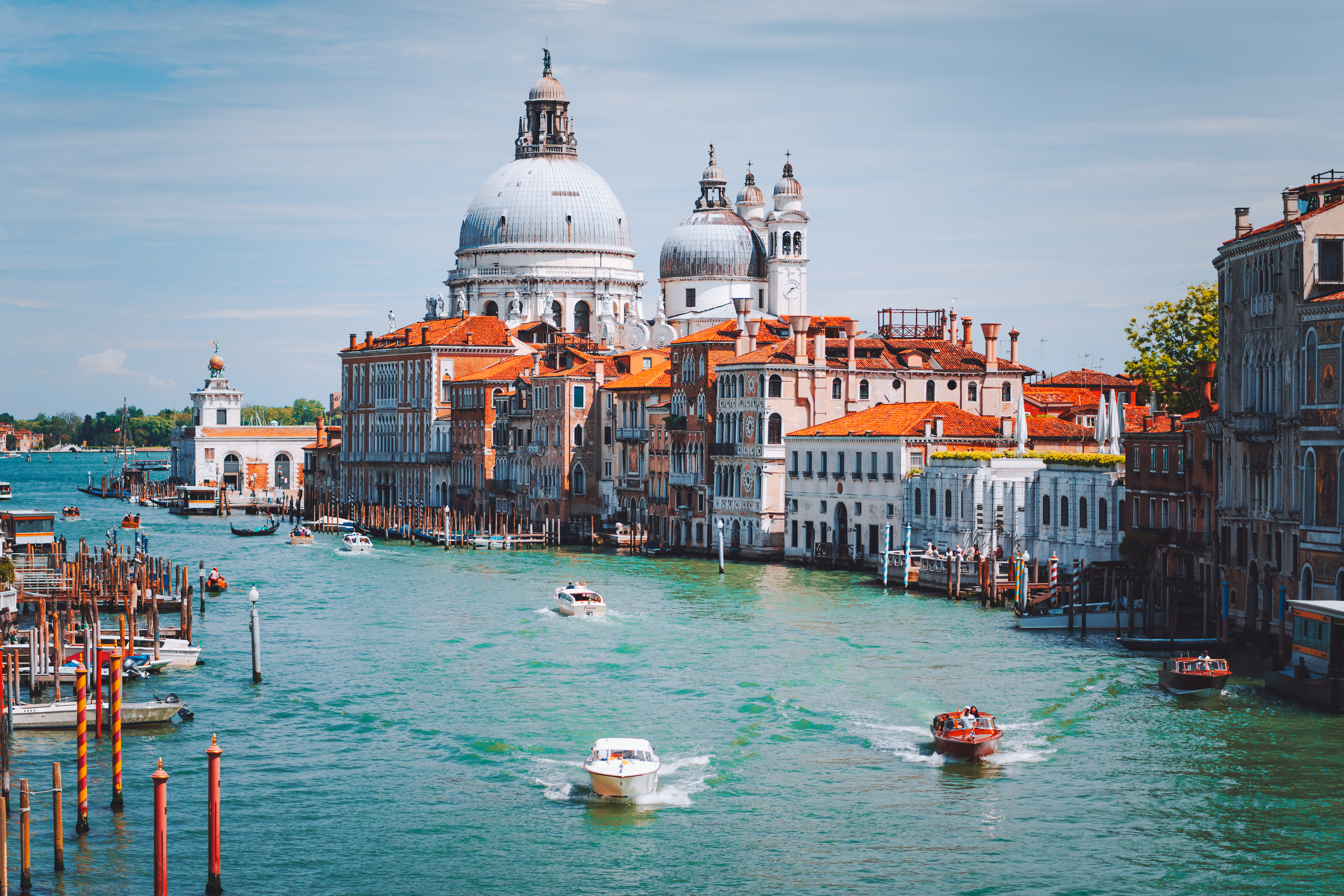
The Waterway Where History Still Floats
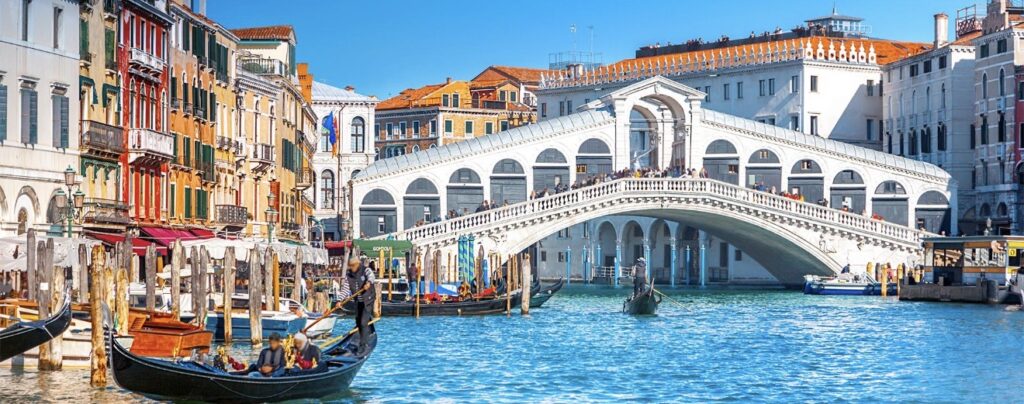
There are cities with streets, avenues, highways, and traffic lights.
And then there is Venice.

A city where water replaced roads, where magnificent palaces rise directly from the edge of a canal, and where boats still travel along a route that has witnessed centuries of wealth, power, art, and history.
At the heart of it all is the Grand Canal — the magnificent waterway that winds through Venice like a giant S, dividing and connecting the city at the same time.
For centuries, this was more than a beautiful view.
This was Venice’s main street.
🛶 A City Built Around Water
The Grand Canal stretches for approximately 3.8 kilometres through the heart of Venice. For centuries, it has served as one of the city’s most important transportation routes, connecting different parts of this remarkable city built across islands in the Venetian Lagoon.
Imagine standing beside the canal hundreds of years ago.
There were no cars.
No buses.
No roaring engines filling the streets.
Instead, merchant vessels, gondolas, working boats, and watercraft moved through the city. The sound of footsteps was often replaced by the gentle movement of water against stone.
Venice was built around the sea — and the Grand Canal became one of the great arteries of its daily life.
🏛️ The Palaces of the Grand Canal
One of the most extraordinary things about the Grand Canal is what stands along its shores.
Palaces.
Hundreds of years old.
Built by some of Venice’s wealthiest and most powerful families, these magnificent buildings transformed the canal into something resembling an open-air museum.
Many of the buildings lining the water date from roughly the 13th to 18th centuries, reflecting the enormous wealth, artistic ambition, and architectural history of the Venetian Republic.
As boats travel down the canal, passengers pass Gothic façades, Renaissance palaces, and Baroque masterpieces.
In Venice, history does not sit behind museum glass.
It stands beside the water.
⚓ The Great Highway of the Venetian Republic
During the height of the Republic of Venice, the city became one of the world’s great maritime powers.
Venice traded with distant parts of Europe, the Mediterranean, and beyond. The Grand Canal became a central route through which merchants, goods, and people moved through the heart of the city.
Warehouses and trading buildings known as fondaci were established along the canal, helping support Venice’s commercial life. The waterway was deeply connected to the city’s rise as a powerful trading republic.
Every boat arriving with valuable goods was part of a much larger story.
A story of wealth.
Exploration.
Competition.
And a city that built an empire from the water.
🌉 The Famous Rialto Bridge
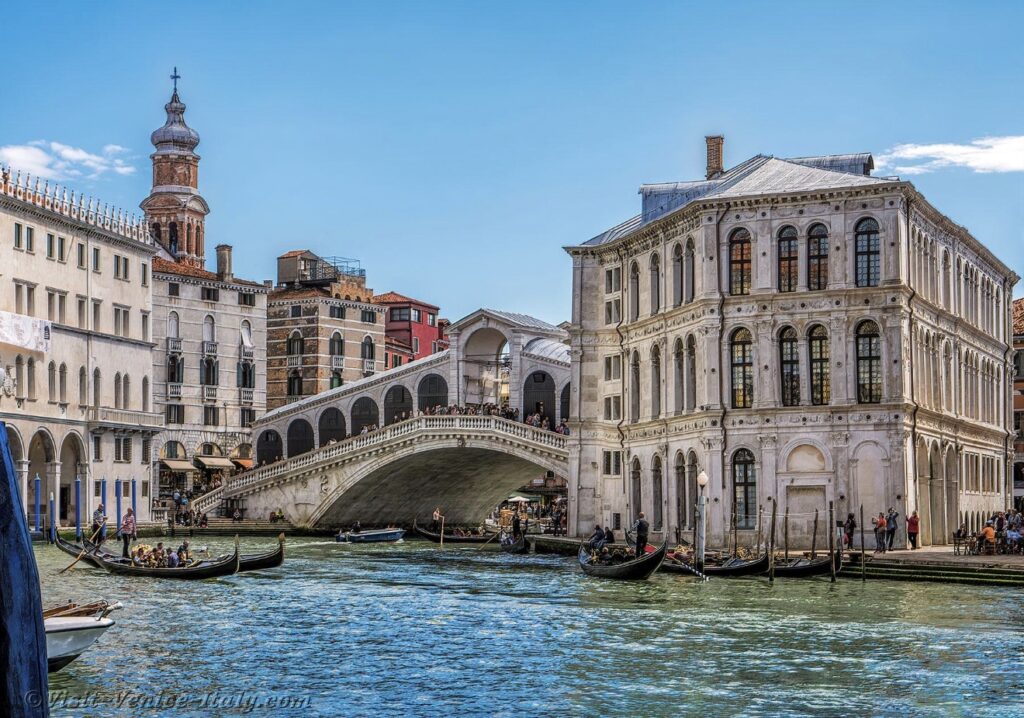
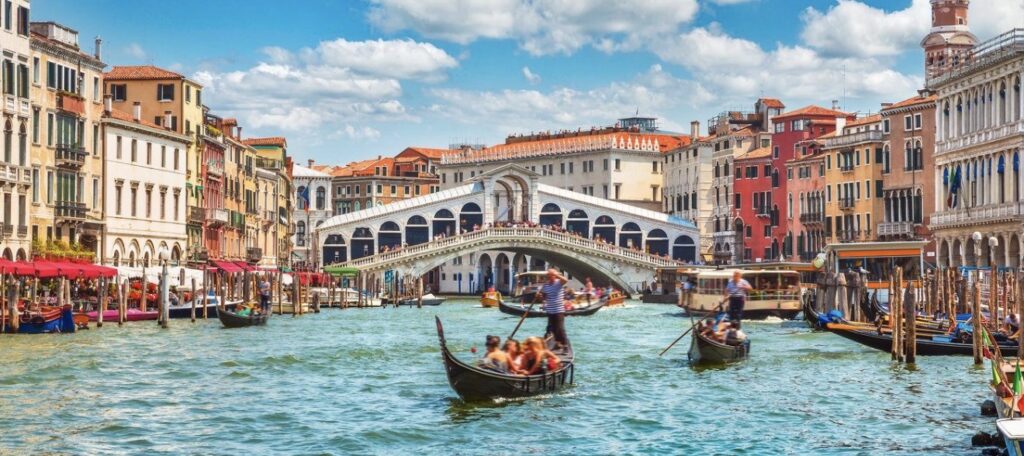
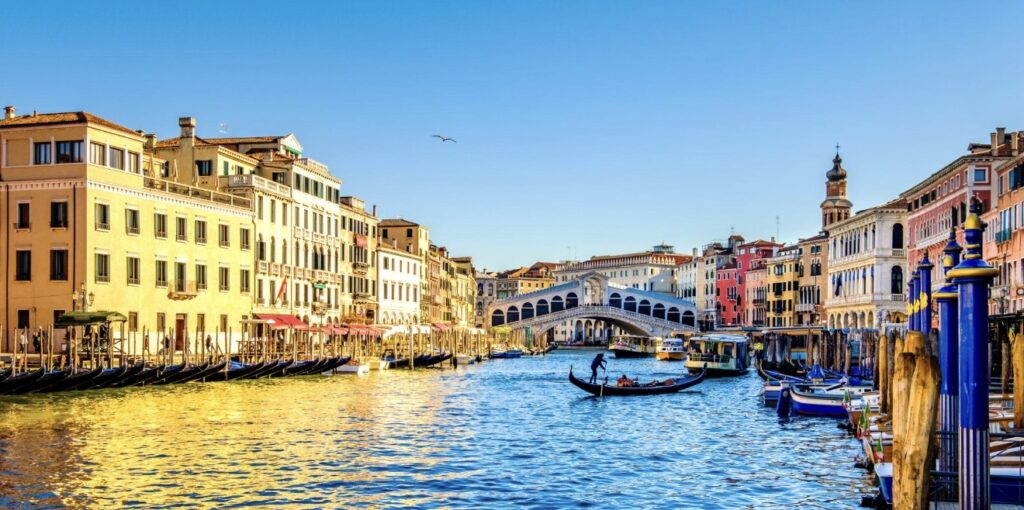
Perhaps no landmark on the Grand Canal is more recognizable than the Rialto Bridge.
For centuries, the Rialto area was one of Venice’s most important commercial centres. Today, the elegant stone bridge remains one of the most famous symbols of the city.
The bridge crosses the Grand Canal while gondolas, water taxis, and vaporetti pass beneath it.
Standing on the bridge, visitors can look in both directions and see one of the most spectacular urban views in the world.
Ancient palaces.
Boats moving through the water.
Buildings glowing in the afternoon sun.
And the Grand Canal stretching into the distance.
🚤 Venice’s Main Street Has No Cars
One of the most fascinating things about the Grand Canal is that it remains a functioning transportation route.
Instead of taxis on asphalt, Venice has water taxis.
Instead of city buses, there are vaporetto water buses.
Instead of delivery trucks, boats transport supplies through the city’s waterways.
The canal is not simply a monument to the past.
It is still alive.
The movement of boats continues day and night, carrying residents and visitors through the same watery cityscape that generations of Venetians have known.
🎭 A Floating Museum of Human History
Venice itself is one of the world’s great cultural landscapes. UNESCO describes the city and its lagoon as an extraordinary architectural and artistic achievement, shaped over centuries by the relationship between people and water.
The Grand Canal represents that relationship perfectly.
It is architecture and transportation.
Beauty and commerce.
History and everyday life.
Every building along its shores has witnessed a different chapter of Venice.
The rise of merchant families.
The arrival of foreign traders.
Lavish celebrations.
Political power.
Wars.
Art.
And the slow passage of centuries.
🌅 The Most Beautiful Journey Through Venice
There may be no better way to experience the Grand Canal than from the water.
As the boat moves forward, Venice slowly reveals itself.
A palace appears around a bend.
A narrow canal disappears between ancient buildings.
A gondola drifts silently across the water.
Then, in the distance, another famous landmark comes into view.
For a few moments, the modern world seems to disappear.
You are no longer simply travelling through a city.
You are travelling through centuries.
💭 Final Thoughts
The Grand Canal is not just the most famous waterway in Venice.
It is the city’s beating heart.
For hundreds of years, boats have travelled through its waters while Venice changed around them. Empires rose and disappeared. Generations came and went. Yet the canal continued to flow through the heart of the city.
And even today, as the sun reflects from the water onto the walls of ancient palaces, it is easy to understand why Venice feels almost unreal.
Because the Grand Canal is more than a beautiful place.
It is a living piece of history — a road made of water, where the past never completely disappears. 🌊🇮🇹