
Table of Contents

There are countless beautiful places in Japan, but few can match the extraordinary variety of Fuji-Hakone-Izu National Park. Stretching across mountains, lakes, forests, hot springs, islands and rugged coastlines, the park brings together many of the landscapes that make Japan so unforgettable.
At its heart stands Mount Fuji. Rising 3,776 metres above sea level, the snow-capped volcano dominates the surrounding countryside and has inspired Japanese artists, poets and pilgrims for centuries. On clear mornings, its perfect cone is reflected in the calm waters of the Fuji Five Lakes, creating one of the most iconic views in the country.
Fuji-Hakone-Izu is also Japan’s most visited national park, welcoming travellers who come to experience its dramatic scenery, historic shrines, volcanic terrain and traditional hot springs. [1]
A First Glimpse of Mount Fuji
Mount Fuji is often the first image people associate with the park. From the shores of Lake Kawaguchi, visitors can watch the mountain change throughout the day. In the early morning, the summit may appear sharply defined against a pale sky. By afternoon, clouds often gather around its upper slopes, hiding and revealing the peak in sudden glimpses.

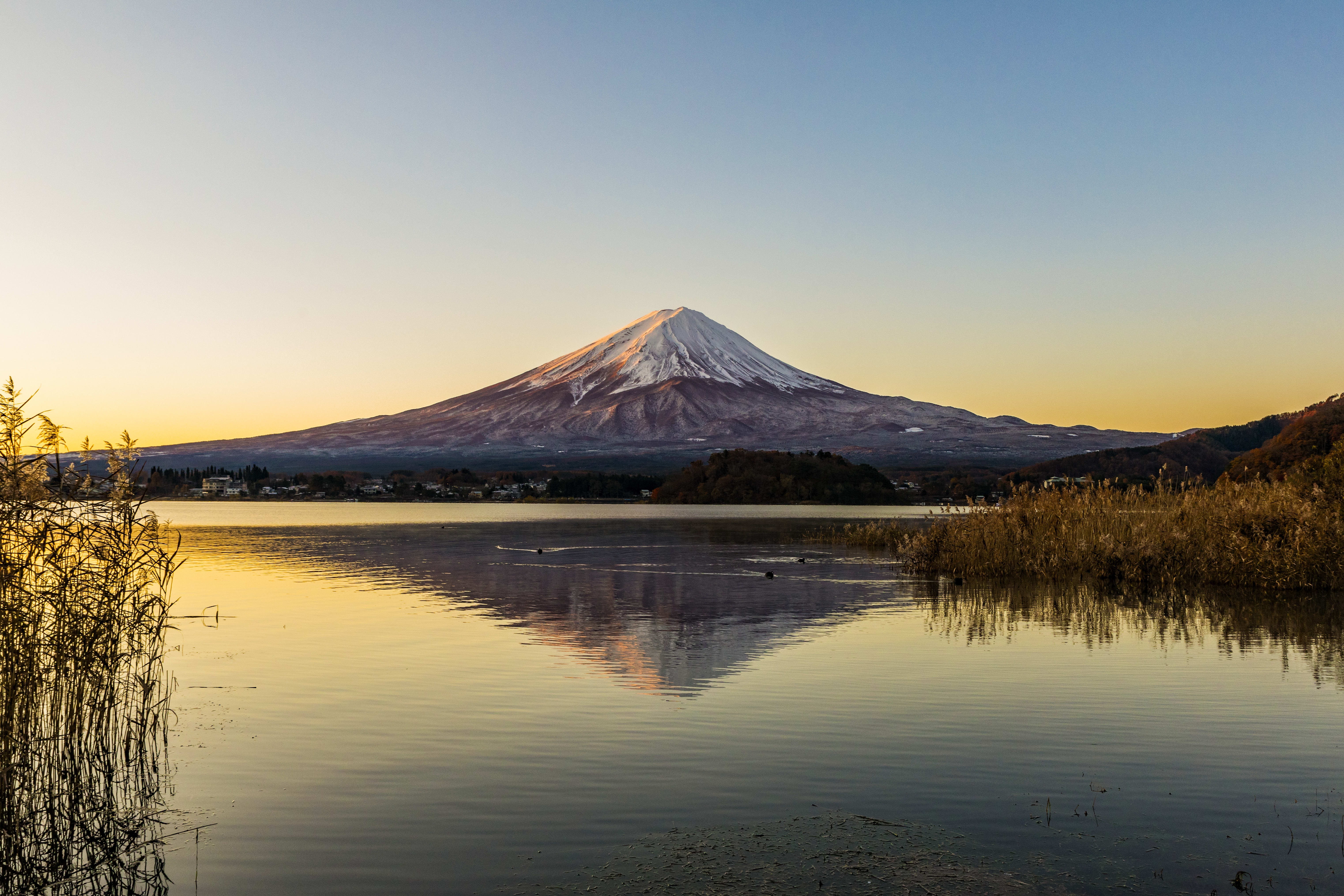
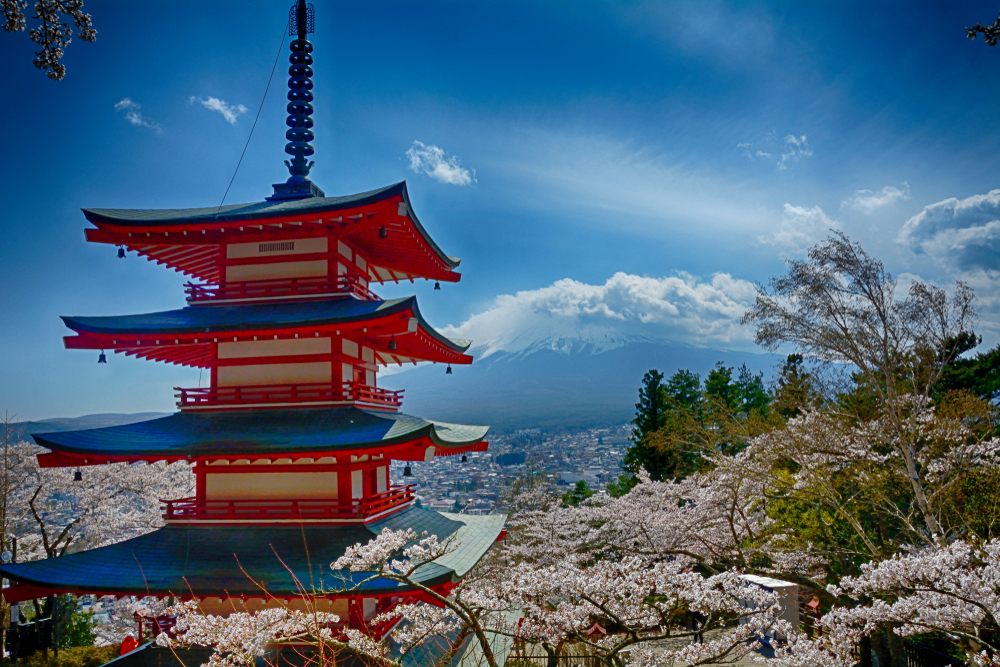
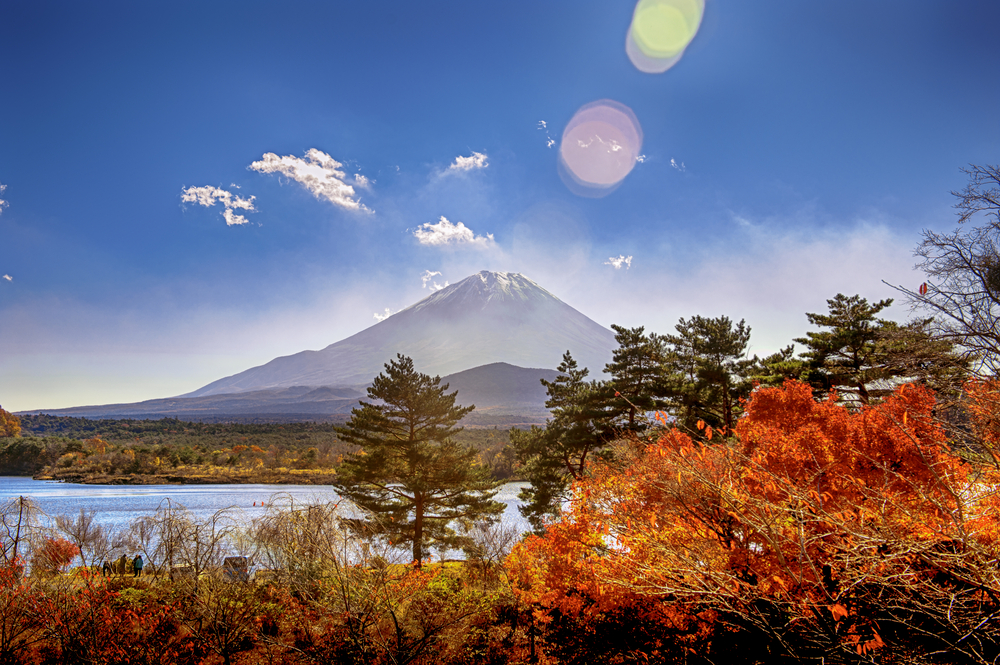
The best time to see Fuji is usually early in the day, before heat and moisture build in the atmosphere. During spring, cherry blossoms frame the mountain in soft pink. In autumn, the surrounding forests turn gold and crimson, creating a dramatic contrast with the white summit.
Yet Mount Fuji is more than a beautiful backdrop. It is deeply connected to Japanese spirituality. For generations, people have climbed its slopes as a form of pilgrimage, treating the mountain as a sacred place rather than simply a natural landmark.
The Quiet Beauty of Hakone
To the east of Mount Fuji lies Hakone, a mountainous region famous for its volcanic landscape, peaceful forests and mineral-rich hot springs. The area is centred around Lake Ashi, a deep-blue lake formed inside an ancient volcanic caldera.
On calm days, sightseeing boats move slowly across Lake Ashi while the wooded mountains rise around the shoreline. When the weather is clear, Mount Fuji can be seen in the distance, creating a layered scene of water, forest and snow-covered rock.
One of Hakone’s most famous landmarks is Hakone Shrine, where a bright-red torii gate stands in the water near the lake’s edge. The gate has become one of the region’s most recognisable sights, especially when mist settles over the lake and the surrounding forest.
Hakone also offers a slower, more traditional side of Japan. Visitors can stay in ryokan inns, walk through cedar-lined paths and relax in onsen baths heated by the volcanic activity beneath the region.
Waterfalls, Forests and Volcanic Ground
The park’s beauty is not limited to wide mountain views. It can also be found in small details: moss-covered stones, narrow forest trails, sudden waterfalls and streams running beneath wooden bridges.
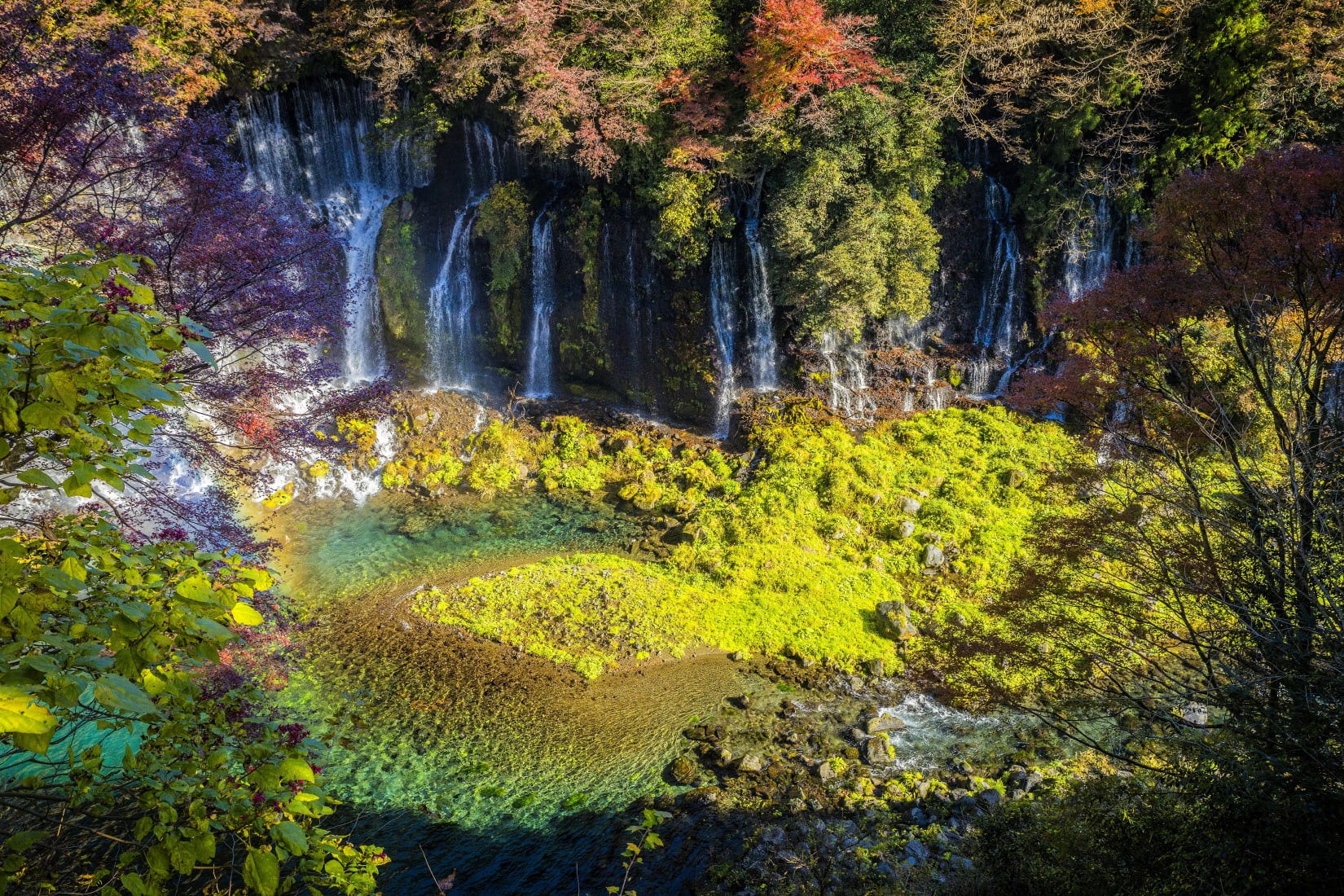
Shiraito Falls is one of the park’s most beautiful natural attractions. Rather than dropping in one powerful column, the water flows over the rock face in hundreds of delicate streams. The result resembles a white curtain stretching across the forest.
The falls are fed by underground water from Mount Fuji. As rain and melting snow pass through the mountain’s porous volcanic rock, the water slowly emerges at the surface. What looks peaceful and delicate is actually part of a vast geological system shaped by the mountain itself.
Where the Mountains Meet the Ocean
One of the most remarkable things about Fuji-Hakone-Izu National Park is its scale. The park extends beyond Mount Fuji and Hakone, reaching south across the Izu Peninsula and outward toward a chain of volcanic islands.
The scenery changes dramatically in these coastal regions. Mountain roads give way to ocean cliffs, sea caves, rocky beaches and windswept headlands. The Pacific Ocean crashes against the coastline, creating a wilder and more open atmosphere than the quiet forests around Hakone.
The Izu Peninsula is especially popular with travellers seeking dramatic coastal scenery and less crowded outdoor experiences. Its volcanic origins are visible in the black rock formations, steep cliffs and unusual shapes carved by waves and weather.
Farther offshore, the Izu Islands offer another side of the national park. These islands combine volcanic peaks, clear waters and distinctive coastal ecosystems. Some are popular for hiking, swimming and diving, while others remain quieter and more remote.
The Best Time to Visit
Fuji-Hakone-Izu National Park is a year-round destination, but each season offers a different experience.
Spring brings cherry blossoms, fresh green foliage and mild temperatures. This is one of the most popular times to visit, particularly around the Fuji Five Lakes.
Summer offers clear access to many mountain trails and is the main climbing season for Mount Fuji. However, the most popular areas can become crowded.
Autumn may be the most visually dramatic season. The forests surrounding Hakone and the Fuji Five Lakes turn shades of red, orange and gold.
Winter often provides the clearest views of Mount Fuji. The air is colder and drier, and the snow-covered summit stands out against bright blue skies.
For photographers, early morning is usually the best time of day. The light is softer, the air is often clearer and popular viewpoints are generally quieter.
A National Park That Tells Many Stories
Fuji-Hakone-Izu National Park is beautiful because it offers more than one kind of scenery. It is a place of enormous contrasts: mountain and ocean, silence and movement, ancient traditions and modern travel.
One moment, visitors may be standing beside a peaceful shrine surrounded by cedar trees. The next, they may be looking across a volcanic valley or watching waves strike the cliffs of the Izu coast.
The park also shows how closely nature and culture are connected in Japan. Mountains are treated as sacred spaces. Hot springs are part of everyday life. Lakes, waterfalls and forests are not merely scenery; they are places of reflection, ritual and memory.
That connection is one of the reasons the park feels so different from an ordinary tourist destination. It is not simply a collection of attractions. It is a living landscape with its own rhythm.