At first glance, Ayutthaya appears to be a city of ruins.
Brick towers rise from green fields. Stone Buddhas sit quietly beneath ancient trees. Temple walls glow orange in the afternoon sun, while the rivers that surround the old city move slowly past, as if nothing has changed.
But Ayutthaya is not a dead city.
It is a city that has survived destruction, war, fire, flooding, changing kingdoms, and the passing of centuries. Its ruins are not simply fragments of the past. They are evidence of a powerful kingdom that once stood at the centre of trade, diplomacy, religion, and culture in mainland Southeast Asia.
Ayutthaya is a place where history does not feel distant.
It stands in the open air, covered in sunlight, moss, and silence.
The birth of a kingdom
The Kingdom of Ayutthaya was founded around 1350 by King Ramathibodi I. It was established on an island formed by the meeting of three rivers: the Chao Phraya, Lopburi, and Pa Sak.
This location was strategically important.
The rivers provided protection, transportation, fertile land, and access to trade routes. The city was far enough inland to be defended from attacks coming from the coast, yet connected to the Gulf of Thailand through the river system.
Ayutthaya’s position helped it grow from a regional kingdom into one of the most important powers in Southeast Asia.
The city was not built in an isolated corner of the world. It was connected to India, China, Persia, Japan, and European maritime powers. Traders, diplomats, religious scholars, soldiers, and travellers passed through its streets and waterways.
Ayutthaya became a city of movement.
Its canals and rivers carried rice, timber, ceramics, spices, textiles, and people. Its markets brought together different languages and traditions. Its temples and palaces reflected the wealth of a kingdom that had become both powerful and cosmopolitan.
A capital surrounded by water
Ayutthaya’s rivers were one of its greatest strengths.
They helped defend the city and made it possible for goods to travel throughout the kingdom. The surrounding waterways also supported agriculture, especially rice cultivation, which formed the foundation of the economy.

During its height, Ayutthaya was one of the largest and most influential cities in the region. European visitors wrote about its wealth, architecture, ceremonies, and immense population.
The city contained royal palaces, Buddhist monasteries, markets, foreign settlements, government buildings, and elaborate religious monuments. Its temples were decorated with carved images, painted murals, gold ornamentation, and tall prang towers inspired partly by Khmer architectural traditions.
Ayutthaya was a political capital, but it was also a spiritual centre.
Buddhist temples shaped the city’s identity. Monks taught, ceremonies were held, and royal power was closely connected with religious legitimacy. The construction of temples was both an act of devotion and a statement of political authority.
To build a great temple was to demonstrate that a ruler possessed wealth, influence, and religious merit.
A meeting place for the world
Ayutthaya’s importance came partly from its connections beyond Siam.
Foreign merchants and communities lived in designated areas around the city. There were Chinese, Persian, Indian, Japanese, Portuguese, Dutch, French, and other traders and visitors.
One of the most important foreign communities was the Portuguese settlement. Portugal established relations with Ayutthaya in the early sixteenth century, and Portuguese merchants became involved in trade and military service.
Japanese merchants and migrants also formed a community in the city. One well-known figure associated with Ayutthaya was Yamada Nagamasa, a Japanese adventurer who rose to a position of influence in the Siamese court during the seventeenth century.
Foreign communities brought new goods, technologies, religious traditions, and political relationships. They also made Ayutthaya part of a much wider world.
The city’s markets offered products from distant regions. Diplomats carried letters between courts. European visitors described their audiences with Siamese kings, sometimes with admiration and sometimes with confusion.
Ayutthaya was not merely receiving outside influences. It was choosing how to respond to them.
Its rulers used diplomacy carefully, balancing relationships with European powers while maintaining independence. The kingdom traded with foreigners but did not become a European colony.
That achievement became especially important during the colonial era, when many neighbouring territories in Southeast Asia came under European control.
Temples built in stone and faith
The remains of Ayutthaya are famous for their temples, but each monument once formed part of a much larger living city.
Wat Mahathat is among the best-known sites. Its central prang and surrounding structures were once part of a grand religious complex. Today, the temple is especially famous for the stone Buddha head enclosed by the roots of a banyan tree.
The image has become one of the most recognizable symbols of Ayutthaya. No one knows precisely how the Buddha head came to rest among the roots, but the scene captures the way nature and history have become intertwined.
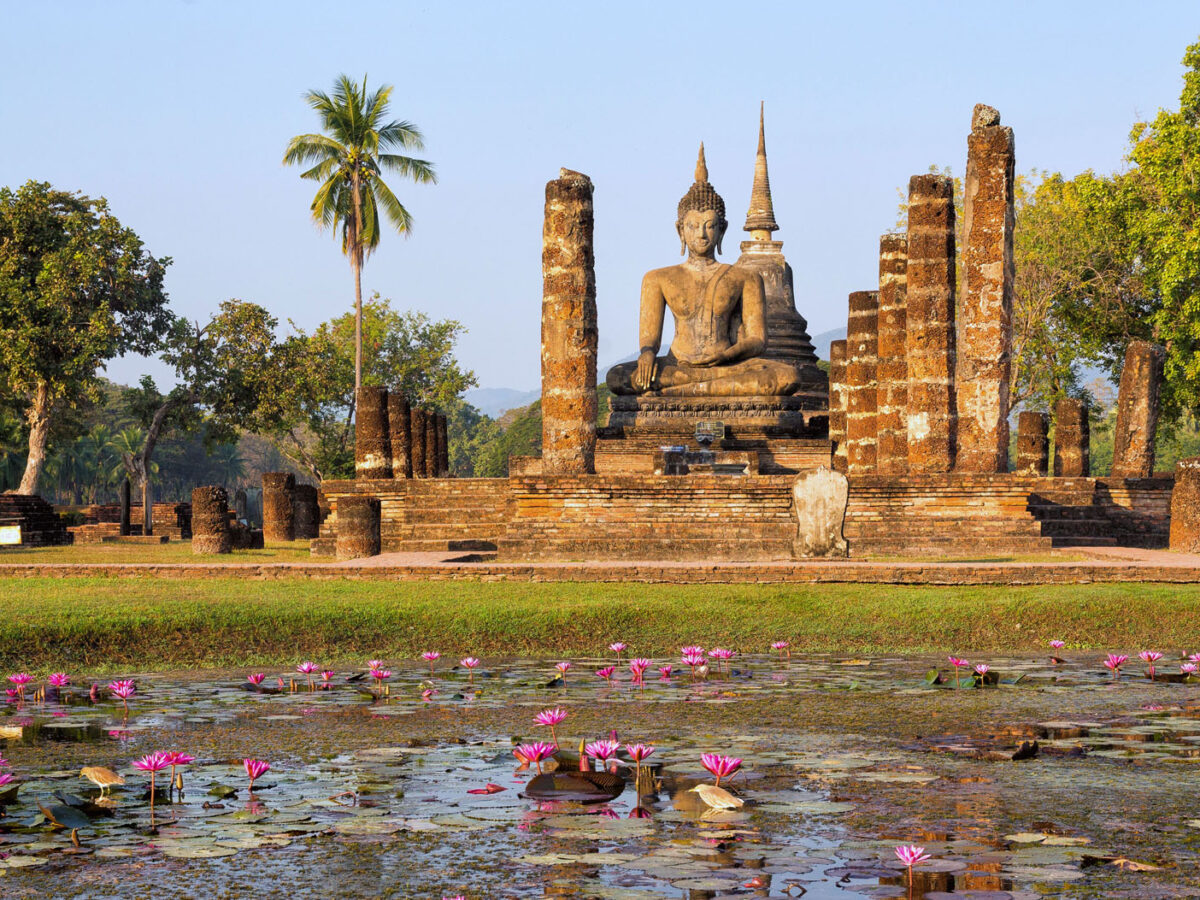
Wat Chaiwatthanaram stands beside the Chao Phraya River and is one of Ayutthaya’s most dramatic monuments. Its central prang is surrounded by smaller towers and rows of Buddha images.
The temple was built in the seventeenth century during the reign of King Prasat Thong. Its design was influenced by Khmer architecture, particularly the style associated with Angkor.
The temple may have had religious and royal significance, and its elevated position made it visible from the river. Even in ruin, Wat Chaiwatthanaram remains powerful because its design was created to be seen from a distance.
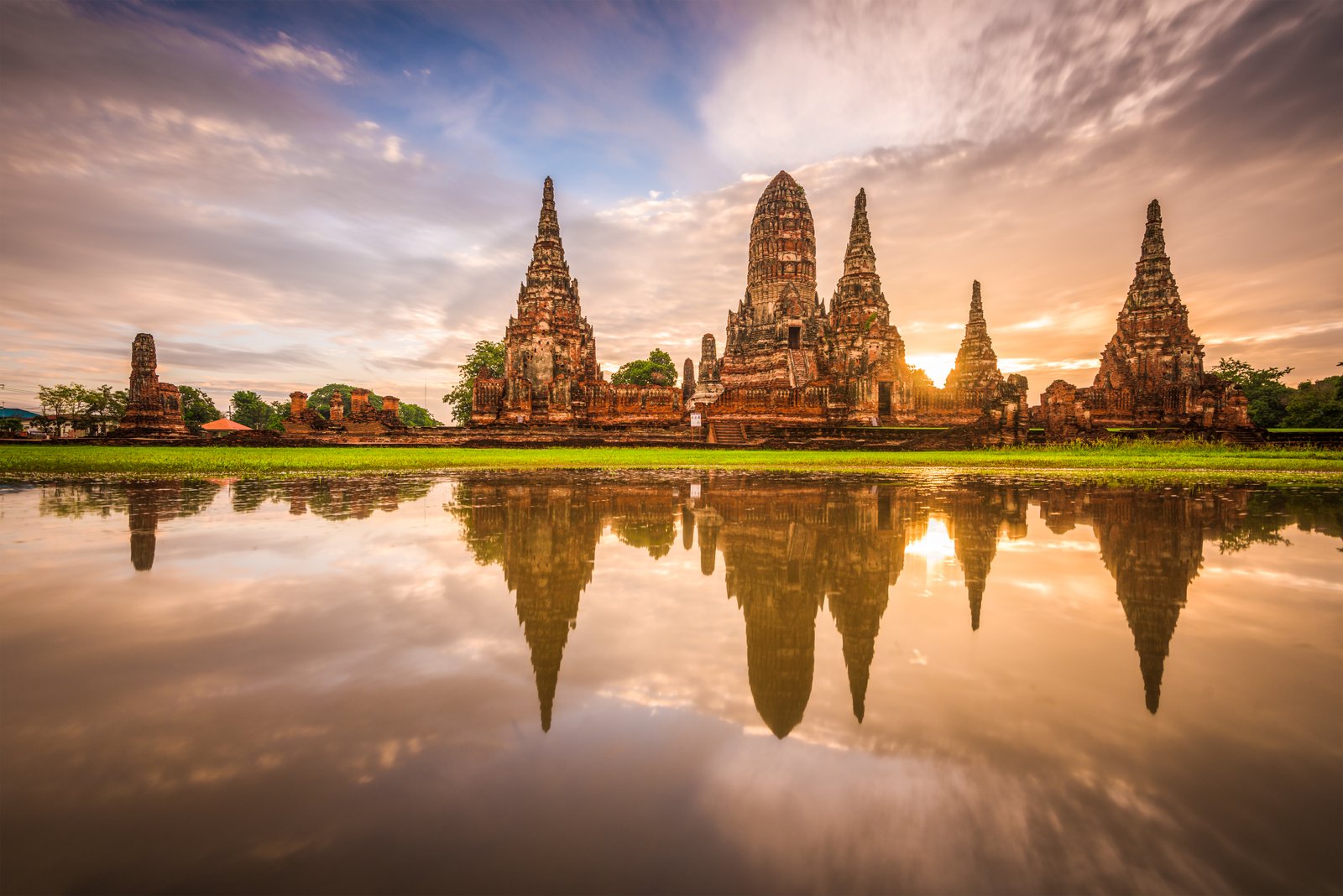
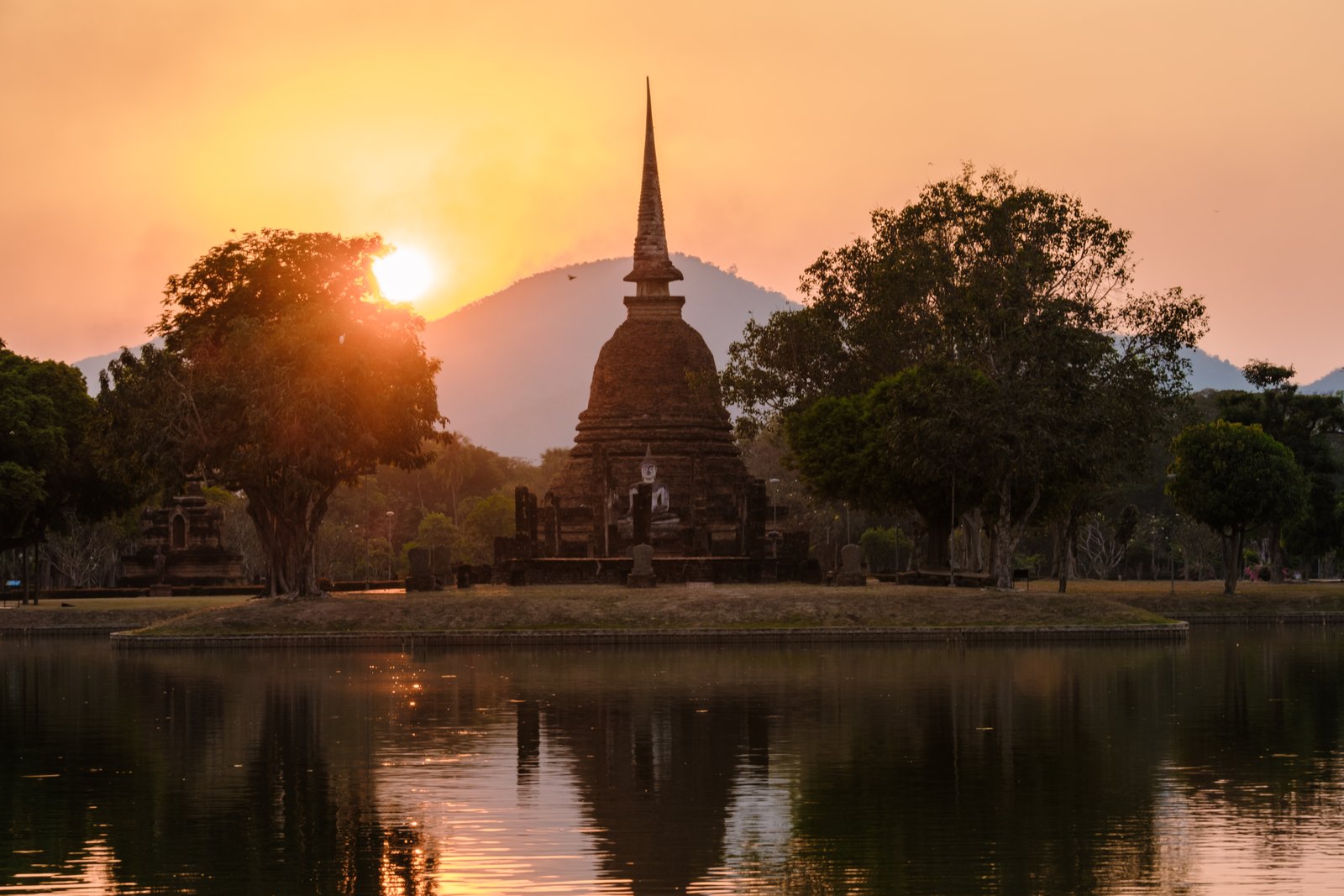


Other important sites include Wat Ratchaburana, Wat Phra Si Sanphet, and Wat Phra Ram. Each reveals something about the city’s religious beliefs, political structure, and artistic traditions.
The temples were not decorative additions to Ayutthaya.
They were at the centre of public life.
The destruction of Ayutthaya
Ayutthaya’s power brought it into conflict with neighbouring kingdoms, especially Burma, now known as Myanmar.
The two states fought repeatedly over territory, influence, trade routes, and political control. Ayutthaya survived earlier attacks, but in 1767 Burmese forces captured and destroyed the city.
The destruction was devastating.
Palaces and temples were burned. Walls were damaged. Religious images were broken or carried away. Many people were taken from the city, and the political system that had ruled Ayutthaya for more than four centuries came to an end.
The capital was not rebuilt in the same location.
A new capital was first established at Thonburi and later at Bangkok, on the opposite side of the Chao Phraya River system. Ayutthaya’s buildings gradually fell into ruin, while trees grew through walls and weather wore away the details of carved stone.
Yet the city was not forgotten.
Its history continued through royal chronicles, religious traditions, family memories, architecture, literature, and the surviving ruins scattered across the island.
A past preserved in the present
In 1991, the Historic City of Ayutthaya was designated a UNESCO World Heritage Site.
The designation recognized the city’s importance as a major historical and cultural centre. Ayutthaya’s ruins show the achievements of Siamese architecture, art, urban planning, religion, and international exchange.
Preserving the city is not simple.
The ruins are exposed to sun, rain, humidity, vegetation, pollution, and flooding. The city is also surrounded by modern communities, roads, homes, businesses, and active religious sites.
Ayutthaya is not a perfectly preserved archaeological display. It is part of a living landscape.
Monks still worship in temples. Visitors walk through ancient courtyards. Residents live and work near the historical park. Festivals and religious ceremonies continue to connect the present with the past.
This mixture of daily life and ancient history is part of Ayutthaya’s character.
It does not feel sealed away from the world. Instead, the past remains woven into the present.
The city beneath the silence
Walking through Ayutthaya can feel strangely peaceful.
Birds move through temple courtyards. Grass grows between bricks. The wind passes through empty windows. In the distance, motorbikes travel along roads that did not exist when kings ruled from the island.
But the quiet can be misleading.
These ruins were once surrounded by crowds, ceremonies, arguments, commerce, and music. Elephants moved through the streets. Boats travelled along the canals. Traders negotiated prices. Soldiers guarded the walls. Monks walked between monasteries. Royal processions passed through the city in carefully arranged splendour.
The ruins are quiet because the people who animated them are gone.
Still, traces remain everywhere.
A staircase shows where thousands of feet once passed. A broken Buddha suggests the violence of conquest. A line of weathered statues reveals the scale of a former temple. A fragment of glazed pottery hints at the international trade that connected Ayutthaya to distant shores.
History often survives in small details.
The inheritance of Ayutthaya
Ayutthaya’s influence did not disappear when the city was destroyed.
Its traditions shaped later Thai architecture, religious practice, court ceremonies, literature, and ideas of kingship. Bangkok, which became the new capital, inherited many customs and artistic traditions from Ayutthaya.
The Thai language also preserves the memory of the old kingdom. The word “Siam,” widely used by foreigners for the region, remained associated with the country until the twentieth century, when the official name Thailand became dominant for much of the modern period.
Ayutthaya’s legacy can be seen in national symbols, museums, temples, historical dramas, and the identity of the Thai people.
The city is remembered not only as a place that was destroyed, but as a source of cultural continuity.
A city that still speaks
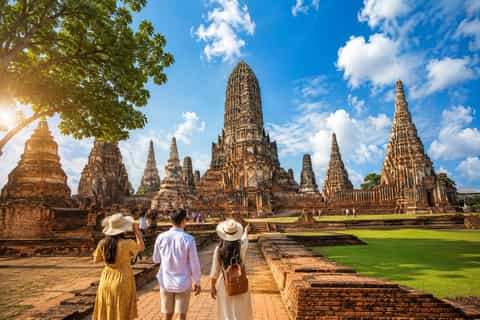
Ayutthaya teaches that ruins are never truly empty.
They contain the ambitions of rulers, the devotion of worshippers, the labour of builders, the movement of merchants, and the pain of war. They also contain the resilience of a culture that continued after its capital had fallen.
The city’s red brick walls may be broken, but they remain deeply expressive. They tell of a kingdom that became wealthy through rivers and trade, powerful through diplomacy and military strength, and beautiful through art and faith.
Ayutthaya is a reminder that no capital lasts forever.
Palaces collapse. Kingdoms change. Rivers alter their paths. Nations acquire new names. Yet the meaning of a place can survive destruction.
At sunset, when the light falls across the ancient temples and turns the ruins gold, Ayutthaya seems to return for a moment. The towers rise from the trees. The river glows beside the old city. The silence becomes filled with imagined footsteps.
The kingdom is gone, but its presence remains.
Ayutthaya does not ask visitors to admire the past from a distance. It invites them to stand among its remains and consider how fragile power can be—and how enduring culture becomes when people continue to remember.